10th World Wilderness Congress Declares
Author:
First published in Sanctuary Asia,
Vol. 33
No. 10,
October 2013
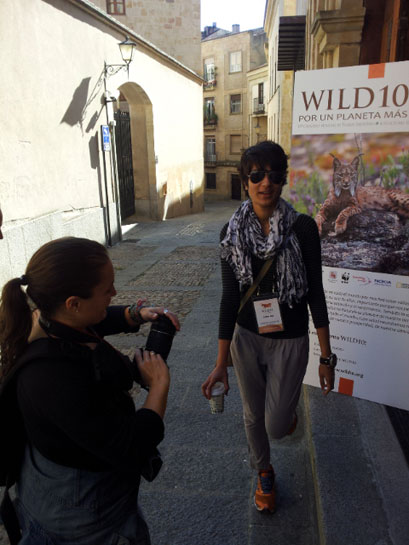
WILD10 is the tenth in a series of World Wilderness Congresses (WWC) occurring every four years since WILD1 in South Africa in 1977. The world's largest gathering of wilderness activists convened on October 4th to learn about and promote the vital connections between wilderness protection and human well-being. With over 35 years of conservation achievements, WWC is the longest-running, public, international environmental forum, conceived and implemented by the WILD Foundation and a vigorous coalition of environmental organizations and forums.
Conservationists, scientists, government officials, indigenous leaders, artists, and the general public began with a moving opening ceremony featuring officials from WILD10's host country, Spain, a traditional blessing by indigenous people from Montana and Brazil, and a ceremonial passing of the leadership baton from the chair of the WILD9 conference, which occurred in Mexico in 2009, to the chair of WILD10.
A sweeping day of panels addressing challenges and opportunities for lands, oceans, climate, and wild species explored opportunities for “rewilding," one of the new watchwords of global conservation, particularly in Europe. Panelists emphasized that wild nature is not a luxury but essential to human health and prosperity, providing “ecosystem services" in the form of clean air and water, biodiversity, sustainable livelihoods, and enhancing human cultural, spiritual and aesthetic experience.
In an important afternoon panel, speakers explored the pressing need to promote the Nature Needs Half concept. Nature Needs Half, which is becoming a unifying concept for conservationists around the world, recognizes that the escalating global ecological crisis has demonstrated that conservation efforts to date have been far too modest. Many scientific assessments over the last 20 years have determined that “nature needs at least half of a given eco-region to be protected, and needs to be interconnected with other such areas, in order to maintain its full range of life-supporting, ecological and evolutionary processes, the long term survival of the species that live there, and to ensure the system's resilience in the face of environmental change."
In endorsing the Nature Needs Half concept, marine conservationist Sylvia Earle, a WILD10 participant, said, “Nature Needs Half applies to the waters of the world as well as the land, from the tops of mountains to the greatest depths of the sea. More than half of the world is ocean, the blue heart of the planet. You decide: How much of your heart do you need to stay alive?"
The second and third days of the WILD10 Global Gathering focused on people and prosperity. New initiatives were launched to link cities as potential rewilding areas (WILD Cities), and to provide rising, young conservationists with a forum and a way of connecting with more experienced conservation mentors (Coalition WILD). Culture and the arts were a vibrant part of the three-day event, featuring a moving talk and exhibit by “creative conservationist" Asher Jay, “peer-reviewed rap" by Canadian Hip Hop artist and conservationist Baba Brinkman, and slideshows of the great trees of Europe, EnArbolar.
The enormous WILD10 Congress is divided into three parts, with the intergovernmental forum of government officials occurring on October 2 and 3, the Global Gathering on October 4-6, a WILD Day of expeditions to wilderness and cultural areas in northwest Spain on October 7, and a Global Forum of in-depth workshops covering 17 program areas with no less than 127 different sessions on topics ranging from citizen activism, indigenous communities, marine protected areas and species, primary forests, social benefits of community nature conservancies, and many more.
For more information on WILD10:
WILD10 President Vance Martin: The Sanctuary Voices Of Reason Series.
Harvey Locke on Nature Needs Half: Nature Needs Half: A Necessary And Hopeful New Agenda For Protected Areas.
Rewilding Europe: Rewilding Europe.
Author: Jennifer Scarlott
Sources: Nature Needs Half, www.natureneedshalf.org.