A Sneak-Peek Into The Life Of A Desert Fox
Author:
First published in Sanctuary Asia,
Vol. 34
No. 8,
August 2014
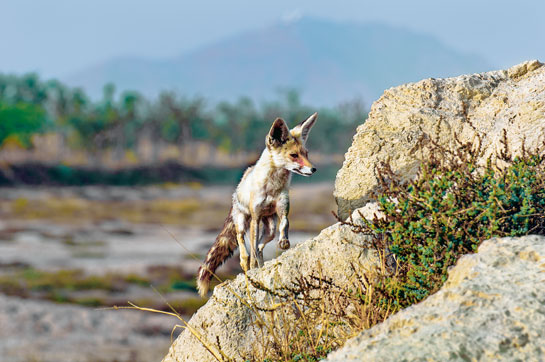
Ace photographer Nayan Khanolkar introduces Sanctuary readers to a desert fox family from the Tal Chhapar Sanctuary in Rajasthan through a marvelous photo spread, embellished by valuable insights from field biologists Bilal Habib and Pallavi Ghaskadbi.
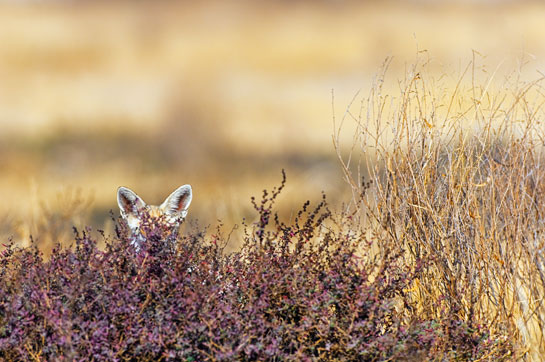
“India is home to three species of foxes - the Indian fox Vulpes bengalensis, the Tibetan sand fox Vulpes ferrilata and the red fox Vulpes vulpes. Three sub species of the red fox are known to occur in India: the Himalayan or hill fox V. v. montana, the Kashmir or Afghan fox V. v. griffithii and the desert fox V. v. pusilla, also known as the white-footed fox, which happens to be the smallest of the three subspecies, found in the arid and semi-arid regions of Rajasthan and Gujarat."
- Dr. Bilal Habib, Scientist,
Department of Animal Ecology and
Conservation Biology, Wildlife Institute of India
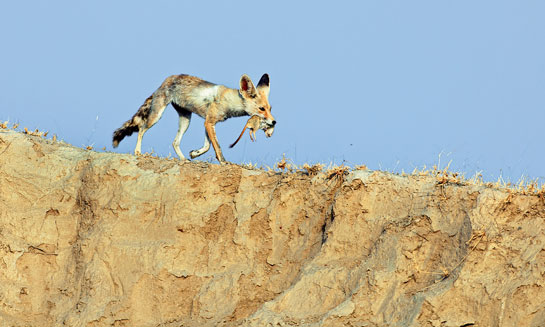
“The sandy-yellow coat of the desert fox provides excellent camouflage in the desert habitat. It is an agile hunter with long legs that allow it quick, short bursts of speed. An omnivore, it survives on insects, spiders, lizards and partridges as well as berries and plant matter. It may also opportunistically scavenge for food. During the breeding season, it mainly preys on gerbils or other desert rodents. This is a cleverly devised strategy to avoid making extra rounds for acquiring substantial amount of nutrition for the young pups. These rodents are either dug out of their burrows or caught by stalking them like a cat."
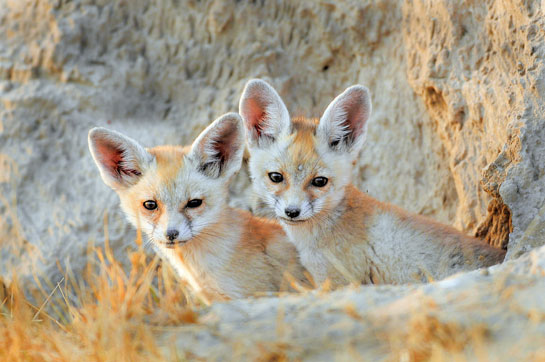
“Typically, sand dunes and sandy river beds are used by foxes to fashion their dens and feeding and denning behaviour is influenced by changing seasons. In the non-breeding season foxes use a simple den with a single entrance. While breeding, more complex dens with multiple openings are used to offer escape routes in the event of any threat. Such complex dens are sophisticated structures that include an elaborately maintained nursing chamber.“
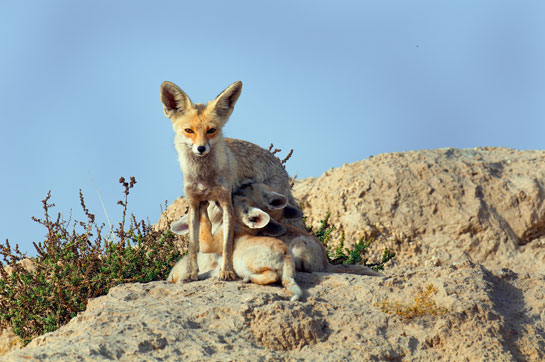
“Otherwise solitary, desert foxes form pair bonds in the breeding season which normally lasts between November and February. After a gestation of 50-53 days, an average of six to seven pups maybe born. Both parents care for the pups till late summer, when they are able to fend for themselves. Pups are born defenceless with their eyes closed and will not emerge from their dens for around 10 to 15 days. After this, they may venture out, but only under the watchful eye of their parents."
“To ensure the long term survival of the desert fox, conservation management efforts should focus on protecting their potential habitats to ensure that foxes are not relegated to mere folklore for future generations."
First appeared in: Sanctuary Asia, Vol. XXXIV No. 4, August 2014.

