Atlas Moths Spotted Breeding At SGNP
Author:
First published in Sanctuary Asia,
Vol. 33
No. 10,
October 2013
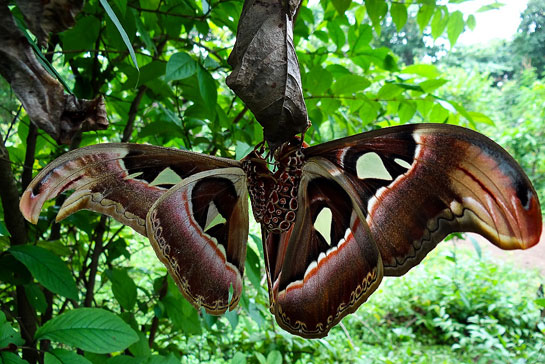 Photo: Naveena Mohan.
Sunil Limaye, Chief Conservator of Forests, Sanjay Gandhi National Park, was walking through the forest he manages when he spotted two Altas moths - the world's largest moths - breeding.
Having spent some time up at the Kanheri Caves, Limaye was setting off down the Silonda trail with avid trekker and photographer, Naveena Mohan, when he spotted this pair of breeding Atlas moths. The world's largest moth, it is found in tropical and sub-tropical forests across Southeast Asia. When ready to mate, the female releases pheromones which males detect using the chemoreceptors on their antennae. Since these moths are unsteady fliers, the female generally sticks to one spot, picking it based on the air currents to ensure her pheromones are carried far and wide.
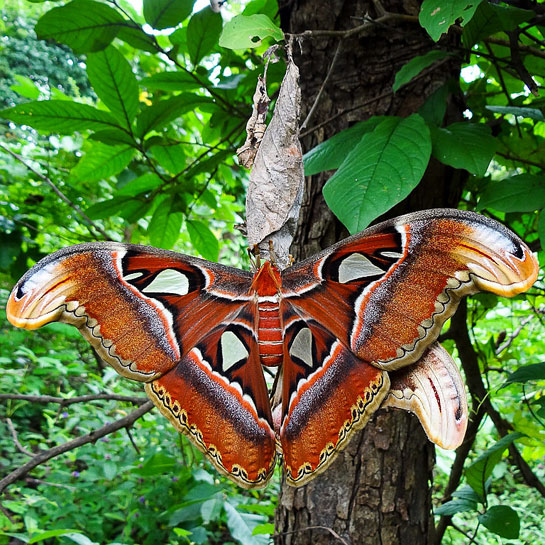 Photo: Naveena Mohan.
After mating, the female will lay several eggs on the underside of leaves. These spherical eggs are around 2.5 mm in diameter and they hatch after two weeks. The dusty-green caterpillars have fleshy spines covered in a waxy white substance on their backs. They grow to around 115 mm. and then pupate with adult moths emerging after a month.
Author: Swati Hingorani.

