Climate Trends Climbing With No End In Sight
Author:
First published in Sanctuary Asia,
Vol. 34
No. 2,
February 2014
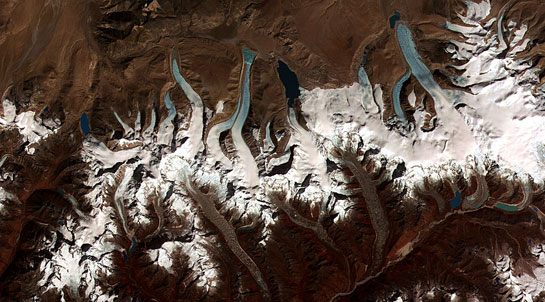
The WMO report (Statement on the Status of the Climate in 2013) says that 2013 was among the ten warmest years since modern record-keeping began in 1850. Thirteen of the 14 warmest years on record have occurred since 2000. And 2013 was the thirty-seventh consecutive year of above-normal global temperature, according to data from NASA. The warmest years on record are 2010 and 2005, with global temperatures about .55 degrees Celsius above the long-term average. El Nino and El Nina events, which warm and cool the planet respectively, are major drivers of natural climate variability. Neither occurred during 2013.
WMO Secretary-General Michel Jarraud said, “The rate of warming is not uniform, but the underlying trend is undeniable. Given the record amounts of greenhouse gases in our atmosphere, global temperatures will continue to rise for generations to come. Our action - or inaction - to curb emissions of carbon dioxide and other heat-trapping gases will shape the state of our planet for our children, grandchildren and great-grandchildren.
"When asked how WMO responds to claims by some climate skeptics that there has been a “global warming standstill since 1997," Mr. Jarraud responded: “What standstill? The coldest year since 2001 is warmer than any year before 1998. There is global variability from year to year. You have to look at the longer period. If you do that, then the message is beyond any doubt. Despite the fact that there was no warming El Nino in 2013, it was still the sixth warmest year. This is significant."
The WMO report emphasizes that surface temperature measurements do not give a full picture of planetary warming. According to the report, “More than 90 percent of the excess heat being caused by human activities is being absorbed by the ocean."
A corollary study from the Earth Policy Institute made clear that while any given weather event could have occurred prior to the period of human-caused (anthropogenic) climate change, “the risk of weather surprises and extremes is increasing as temperatures climb. Furthermore, the danger of hitting invisible thresholds - such as the loss of major ice sheets - where the effects of global warming become irreversible on a human timescale is real. With rapid rates of change, adaptation becomes difficult to impossible. For the safety of civilization, governments around the world have agreed on the goal of staying within a temperature rise of 2 degrees Celsius. We will shoot past that mark, however, without dramatic reductions in fossil fuel burning and deforestation. This requires investment, but the costs that will mount from inaction are beyond measure."
Author: Jennifer Scarlott, Sources: World Meterological Organisation, Earth Policy Institute.Â

