Deadly Floods In N. India Highlight Urgency Of Climate Change
Author:
First published in Sanctuary Asia,
Vol. 33
No. 6,
June 2013
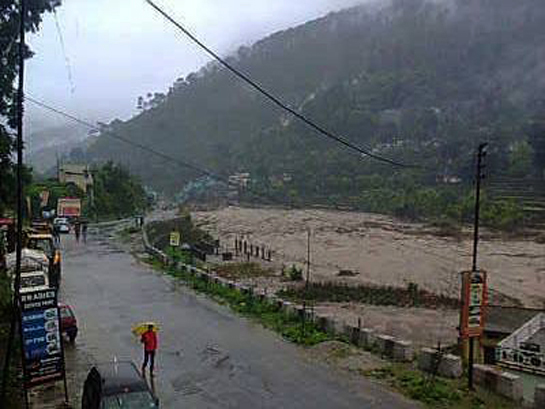 Photo: Gajendra Rautela/Climate Himalaya.
A new World Bank report released on June 19, 2013 stated that the alternating droughts and flooding that India is experiencing will become more frequent and extreme as the effects of climate change continue to worsen. The report indicated that extreme weather phenomena will result in more displacement, loss of life, and poverty in the coming decades.
In other parts of the country, the monsoon is bringing much-needed relief to many farmers - 70 per cent of Indians directly or indirectly depend on farming for their livelihoods. With farming making up nearly 15 per cent of India's $1.83 trillion GDP, climate-induced drought has become an enormous economic threat. The Indian Space Research Organization has found that 68 per cent of the country is now prone to droughts, with a third described as “chronically drought-prone."
India endured its second drought in four years last August, with rainfall 20 per cent below average across the nation, and 70 per cent below average in states like Punjab. The July 2012 blackout that left more than 600 million Indians without power has been attributed to the drought - low rainfall led farmers to irrigate with water pumps, putting more stress on the country's electrical grid.
The relatively early onset of this year's monsoon has been welcome news in some parched areas of India. But extreme flooding in the northern states reveals India's vulnerability to the effects of climate change. Flooding left more than 71,000 stranded in Uttarakhand, and thousands of others displaced and missing across the region. Dozens of buildings and bridges have collapsed, and landslides have stranded and injured hundreds. More than 5,500 troops from the Indian Army are leading rescue operations, and Prime Minister Manmohan Singh announced a $170 million aid package for Uttarakhand on Wednesday.
According to the World Bank report, droughts, floods, more intense heat waves, sea-level rise, stronger cyclone and storm surges can be expected for India's 1.2 billion people in the coming months and years, adversely affecting the economy, and creating complex security, humanitarian, and environmental challenges.
For more information about climate change in India:
http://www.sanctuaryasia.com/conservation/news/9395-climate-impact-on-common-plants-and-animals.html.
http://www.sanctuaryasia.com/conservation/news/9281-the-balipara-foundation-awards-in-association-with-sanctuary-asia.html.
http://www.sanctuaryasia.com/conservation/news/9397-the-acid-ocean.html.
http://www.sanctuaryasia.com/magazines/cover-story/9200-the-sanctuary-voice…
Article on World Bank report: http://www.worldbank.org/en/news/feature/2013/06/19/what-climate-change-means-africa-asia-coastal-poor.
Author: Jennifer Scarlott, Source: The New York Times, ThinkProgress.org.

