Epic Flooding In Colorado Attributed To Climate Change
Author:
First published in Sanctuary Asia,
Vol. 33
No. 9,
September 2013
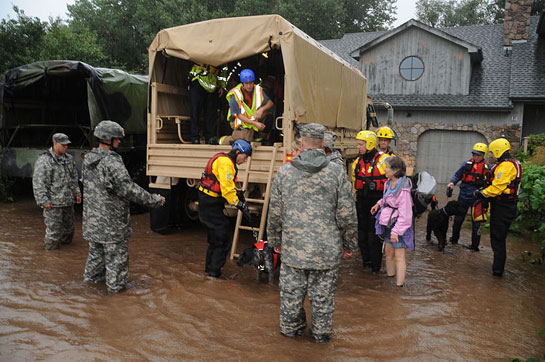
The record rainfall amounted to more than half a year's worth of rain falling in just three days, transforming small creeks and streams into raging brown rivers and causing mudslides and surges of water and debris to blast down narrow mountain canyons and steep slopes. Thousands of families have been displaced, and hundreds of people are unaccounted for. The death toll is currently at 8. This month, Boulder has received 12.3 inches of rain, compared to its usual 1.7 inches in September, with the month not yet over. The epic rainfalls have come on the heels of a moderate summer drought as well as the state's most destructive wildfire on record, a fire that destroyed vegetation that ordinarily would have helped tame the past week's floodwaters. In the last decade and a half, Colorado and other parts of the American Southwest have been hit hard by unprecedented heat, drought, tree deaths, wildfires, insect infestations, and floods. Each has been called the “worst natural disaster" the region has seen.
According to the National Weather Service, the amount of “precipitable water" in the air over Colorado is still at record levels for this time of year, an indication that there is continued high potential for heavy rainfall. The floods in the Boulder area are likely to be closely researched by some of the world's top climate scientists, who are headquartered in the area. Both the National Center for Atmospheric Research and the Earth System Research Laboratory are based in Boulder. Both were forced to close due to flooding.
Extreme rainfall events have become more frequent across the U.S. in the past decades due in part to global warming. Rising air and ocean temperatures cause the air to carry more water vapor, yielding more extreme rain and snowstorms. A National Climate Assessment report released in January of 2013 said that in the future, “increases in the frequency and intensity of extreme precipitation events are projected for most U.S. areas."
Although much of the American Southwest is predicted to be drier than in the past, a greater proportion of the rain that does fall is likely to come in the form of heavy precipitation events. A study published in the journal Nature Climate Change on June 9, 2013 found that the frequency of floods as well as the numbers of people in danger from flooding will increase as the world continues to warm, especially in countries in Southeast and South Asia.
Author: Jennifer Scarlott
Source: http://www.climatestorytellers.org/

