First-Of-Its-Kind Marine Species Database
Author:
First published in Sanctuary Asia,
Vol. 32
No. 11,
November 2012
This creation comes at the opportune moment, as there is a desperate need for consolidated knowledge and understanding of the species that live in the world's oceans. Estimates suggest that we are as yet unaware of as many as two-thirds of these marine species, according to research published in the journal Cell Biology. Of as many as a million species that are held in the ocean, we have so far only described about 226,000 of them, while another 65,000 are awaiting descriptions in specimen collections.
These facts have come to light thanks to the comprehensive register of the world's marine species that was created by 270 experts representing 146 institutions and 32 countries around the world. The database is continually being updated as new information arrives, and is now 95 per cent complete. The register eliminates the inefficiencies that would arise from dependence on expert polls based on extrapolations from past rates of species descriptions and other measures. Those estimates varied widely, suffering because there was no global catalog of marine species.
"It is the state of the art of what we know and perhaps do not know about life in the ocean," says Ward Appeltans of the Intergovernmental Oceanographic Commission (IOC) of UNESCO, who led the research. Researchers expect that smaller crustaceans, molluscs, worms, and sponges comprise the vast majority of unknown species yet to be found.
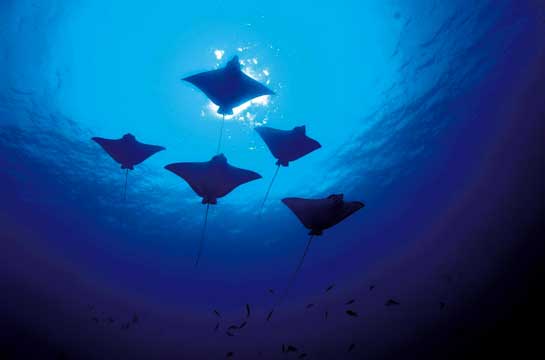
Photograph by Sumer Verma.
"Building this was not as simple as it should be, because there has not been any formal way to register species," says Mark Costello from the University of Auckland, who was part of the research team. “A particular problem is the occurrence of multiple descriptions and names for the same species, also called ‘synonyms'," Costello says. For instance, each whale or dolphin has on average 14 different scientific names.
Researchers expect that as many as 40,000 species have been erroneously classified on account of the ‘synonyms' issue, discovered through careful examination of records and specimens. These species will be struck from the list, and slowly compensated for through DNA testing, which is expected to reveal overlooked ‘cryptic' species.
The importance and significance of marine species is often underestimated, since fewer species live in the ocean than on land. Marine life, however, is crucial to our understanding of life on earth, representing a more ancient evolutionary lineage that provides a fundamental link to our understanding and knowledge of speciation on Earth. WoRMS is a positive first step in this direction.
"This database provides an example of how other biologists could similarly collaborate to collectively produce an inventory of all life on Earth," Appeltans says.
Source: Sanctuary Asia
Link to the published article: http://www.marinespecies.org/news.php?p=show&id=3246

