Incriminating Evidence Against Thailand's Tiger Temple
Author:
First published in Sanctuary Asia,
Vol. 36
No. 1,
January 2016
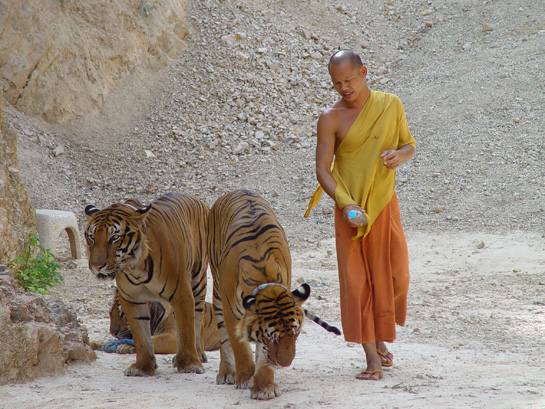 Photo: Michael Janich/Wikimedia Commons.
A recent investigative report by Sharon Guynup published in National Geographic has compounded long-held worries that Thailand's famous Tiger Temple is party to the illegal wildlife trade. The Wat Pa Luangta Bua Yannasampanno in the country's Kanchanaburi Province, better known as the Tiger Temple, is a popular tourist destination. The temple keeps an estimated 147 captive tigers that are allowed to be fed, petted, walked and played with by visitors. The enterprise generates millions of dollars in revenue for the monastery each year.
Murmurs of animal abuse and exploitation have long been in the air, and allegations of the monastery being involved in illegal tiger trafficking to supply the market for tiger parts have repeatedly surfaced. Guynup's report details fresh evidence on the same.
In her words -
“In December, the Australian nonprofit Cee4Life leaked new evidence to Steve Winter and I that reveals illegal cross-border tiger trafficking from the monastery. Our story and video was released today by National Geographic: Exclusive: Tiger Temple Accused of Supplying Black Market.
The documents, video and audio provided by Cee4Life prompted our own investigation. We found that: The Tiger Temple has been smuggling tigers across the border to tiger farms in Laos since at least 2004, with the full knowledge of—and at the direction of—the temple's founder and leader, Abbot PhraAchamPhoosit (Chan) Kanthitharo.
We've learned that within a week, Thai authorities will begin confiscating some—or all—of the temple's tigers and will relocate them to its own wildlife facilities. And within the next few weeks, the Royal Thai Police will take over an investigation into what happened to three male tigers that disappeared in December 2014. These cats were traceable: they were microchipped and registered with the government.
The impact of illegal trading from a captive facility like the Tiger Temple extends far beyond the lives and welfare of these 147 tigers. Captive tigers leaked into the illegal trade from any source feed a growing demand for luxury tiger products, including tiger skins and tiger bone wine. That demand places the lives of every one of the world's last 3,200 wild tigers in danger.
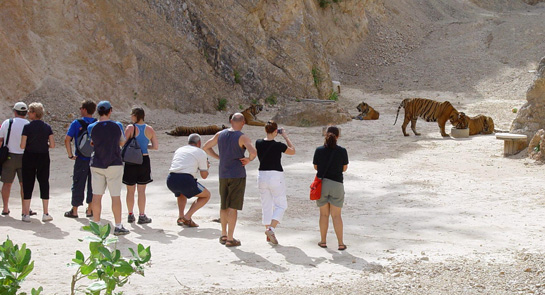 Photo: AxelBoldt/Wikimedia Commons.
As tiger expert Judy Mills notes at the end of our video, This is not just about a single Buddhist temple in Thailand. This is about the fate of wild tigers."

