India Sees Simultaneous Rise In Fossil Fuel Emissions And Frequency Of Extreme Weather Events
Author:
First published in Sanctuary Asia,
Vol. 34
No. 3,
March 2014
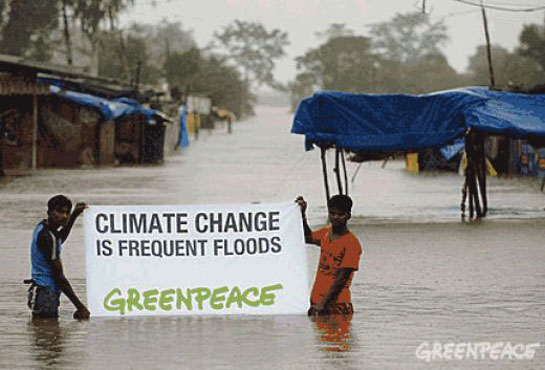 Photo: Greenpeace India.
The Tyndall study indicates that India's rising contribution to greenhouse gas emissions is coming primarily from burning coal. Scientists in India calculate that India's fossil fuel emissions are 60 per cent greater than they were 20 years ago, despite Delhi's 2009 pledge to reduce emissions by 25 per cent. A 2011 study by the World Bank estimated that 200 million people in India would be highly vulnerable to natural disasters due to rapid urbanization and extreme weather stemming from climate change.
India climate experts and meteorologists predict that extreme and unpredictable weather events will become increasingly frequent. “These extreme events will increase under climate change and we need to gear up quickly to counter it, before it's too late, through micro-level climate vulnerability assessment and drastic cuts in fossil fuel emissions," said G. Bala, a climate change expert at the Indian Institute of Science Divecha Centre for Climate Change in Bangalore.
As people were killed and injured this month by large chunks of hail in Andhra Pradesh, and hail storms destroyed cropland across Karnataka and Maharashtra, climate change scientists warned the country to brace itself for continued freak weather events, including drought, extreme rainfall, and shifts in monsoon patterns. The scientists pointed to last June's catastrophic cloudburst in Uttarakhand, a severe cold wave in north India this year, heavy snowfall in Chevalla in Andhra Pradesh, and a record 32 degree Celsius reading in Bangalore last January as events that may all be tied to changes in the climate arising from worsening carbon pollution.
350 India Youth Movement For Climate Sanity Is Taking Flight.
Climate Trends Climbing With No End In Sight.
Nature Needs Half Leave Me Alone.
Author: Jennifer Scarlott.

