IUCN And Sylvia Earle Name Andamans And Lakshwadeep As New “Hope Spots"
Author:
First published in Sanctuary Asia,
Vol. 33
No. 10,
October 2013
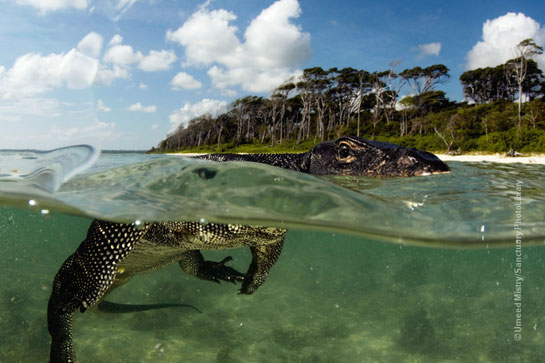 Photo: Umeed Mistry.
A Hope Spot, according to Mission Blue, a global marine protection organization led by Dr. Earle, is a special place that is critical to the health of the ocean. Some Hope Spots are already formally protected, while others still need formal protection. While about 12% of the earth's land surface is under some form of protection, less than one per cent of the ocean is protected in any way.
The islands are the first spots in India to be added to the IUCN/Mission Blue network, which consists of 19 existing locations, and 31 new Hope Spots around the world. According to Dr. Earle, “What we've done here is identify a number of critical areas that represent a real hope to restore the health of our imperiled ocean. The pristine seas, the World Heritage areas, marine sanctuaries, marine protected areas, reserves, whatever they're called. We started with 19, now the number is 50, but for me there really is just one Hope Spot: it's the ocean."
India's Andaman and Nicobar Islands consist of 556 islets containing unique flora and fauna, and fragile ocean reefs. The islands contain 96 wildlife sanctuaries, nine national parks, and a biosphere reserve. India's National Institute of Oceanography has begun an inventory of the coral reefs of Lakshwadeep.
The new Hope Spots were announced at the 3rd International Marine Protected Areas Congress (IMPAC), held in France from October 21-27, 2013. The delegates at IMPAC, joined by Dr. Earle, emphasized that the world essentially shares one ocean, and that global threats such as ocean warming, acidification, and overfishing, require collective solutions.
Author: Jennifer Scarlott, Source: The Times of India; Mission Blue.Â

