Landscape Connectivity Critical For Elephant Conservation
Author:
First published in Sanctuary Asia,
Vol. 37
No. 1,
January 2017
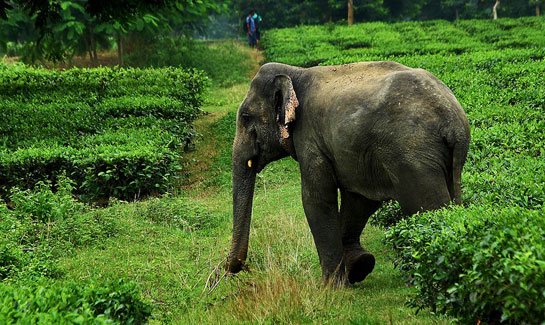 Photo: Divya Vasudev-Varun Goswami/WCSIndia.
In an article published in the international journal Frontiers in Ecology and Evolution, Dr. Varun R. Goswami and Dr. Divya Vasudev, conservation biologists at WCS India, highlight the need to balance multiple conservation needs and opportunities in large landscapes.
“Asian elephant conservation provides the perfect example," says Dr. Goswami, who heads the elephant programme for WCS India. “Elephant survival in heterogeneous landscapes rests on their ability to move among habitats in search of food and space," he elaborated. But this movement often brings elephants into contact and potential conflict with people, especially in densely-populated countries like India.
A typical response to conflict is to prevent elephants from coming out of forests through fences and trenches. “But this strategy has a direct negative impact on connectivity, and as a result, on elephant persistence," says connectivity expert Dr. Vasudev.
While some say that demarcated corridors will not be fenced, Dr. Vasudev cautions, “Animals don't always move through corridors that people demarcate, rather they use routes they view as least threatening. Corridors are of course important, but we still have a way to go in knowing where animals move, what stops dispersal, and which areas are most critical for maintaining connectivity".
This debate becomes highly pertinent in light of the railway fences coming up around some of India's most important forests. The cost of these fences reportedly runs to more than Rs. 1 crore per km. “These fences come at huge monetary and manpower costs, and before putting them up, we need to think hard about where we place them," emphasised Dr. Goswami. “It is critical that we minimise human-elephant conflict, but while simultaneously thinking about elephant movement needs between habitats."
“Endangered species - elephants, tigers, gibbons - are more and more present in fragmented landscapes. Conserving them in these landscapes means that we need to have science-based policy, long-term vision, and incorporate diverse challenges and opportunities", says Dr. Vasudev.
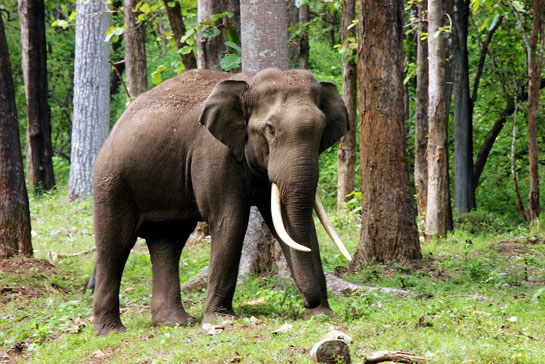 Photo: Jitendra Shankaraiah/WCS-India.
The article titled ‘Triage of conservation needs: the juxtaposition of conflict mitigation and connectivity considerations in heterogeneous, human-dominated landscapes' authored by Dr. Goswami and Dr. Vasudev appeared in the journal Frontiers in Ecology and Evolution, and can be accessed at: https://doi.org/10.3389/fevo.2016.00144
Source: WCS Newsroom

