Mumbai Metropolitan Magistrate acquits journalists, holds UPL and GPCB guilty of inaction and failure to protect environment
Author:
First published in Sanctuary Asia,
Vol. 38
No. 9,
September 2018
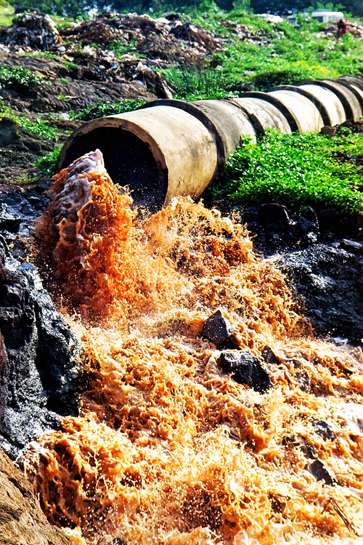
Photo Courtesy : Shailendra Yashwant/Greenpeace
In the 108 long page judgment, the honorable judge came down heavily on the role of Gujarat Pollution Control Board(GPCB) and Gujarat Industrial Development Corporation (GIDC): “.. it is crystal clear relating to the role of G.P.C.B. and their officers about their seriousness of the work. Despite repeated directions by the Hon'ble Apex Court and by the Hon'ble High Courts, the officers and Government machinery including G.P.C.B. and G.I.D.C. have been negligent in discharge of their statutory duties. This inaction by them in nothing but a connivance with such industrialist for which no other direct evidence is required. One can read between two lines about the involvement of these officers. It is well substantiated by the above evidence and case laws, G.P.C.B. is guilty of total inaction in taking effective steps for protecting or improving the environment. Thus, it is not difficult to get permission from G.P.C.B. same in reflected in the Article as 'Minor Irritant''.
Reprimanding United Phosphorus Ltd. (UPL), the complainant company, the judgment observes that ‘The contention of complainant that G.P.C.B. has not lodged any prosecution and the company has never been prosecuted. However, in the light of documents of G.P.C.B. and testimony of witnesses and above reasoning, it is not a matter of honour to the complainant but it is a matter of serious concern to re-think over it.' ‘Simply placing on record of ISO certification does not exclude the duty of protecting the environment. It is important to preserve and protect the environment.'
In July 1995, Shailendra Yashwant, environmental photo-journalist wrote an article ‘Toxic waste chokes Vapi's lifeline' on dangerous level of pollution in Vapi, a chemical hub in Gujarat'. The report highlighted how discharge of untreated toxic effluents through unauthorised and illegal outlets was polluting the Damanganga River. The report also referred to a Greenpeace report about import of a second-hand chlor-alkali plant from Norway by UPL that had been closed because it was considered an environmental liability by the exporting country.
The article was commissioned by Bittu Sahgal, Editor, Sanctuary Asia/Sanctuary Features and published in Newstime, an Eanadu group publication owned by Ramoji Rao, all of whom were dragged to the court by United Phosphorous Ltd on defamation charges. Acquitting all three journalists, the judgment states that the disputed article is “..substantiated by the documents of G.P.C.B. and testimony of the officers of G.P.C.B. also the earlier articles. The article has been published without any malice for the public good since publication of the act of environmental pollution likely to adversely impact to the human being and to the environment. The said article in good faith conveys for the public good a caution on the adverse environmental impacts by the import of such obsolete technology and its operation in the country'.
Welcoming the judgment, Senior Advocate Raj Panjwani, counsel for the accused journalists said “Justice has prevailed. This case has set a precedent for freedom of press. In India, both libel and slander are criminal offences under its Penal Code and enables an aggrieved person to file a criminal case against the person accusing him/her. Invariably, corporations abuse this law by filing SLAPP suits such as this case, to intimidate environmental watchdogs and prevent them from standing up courageously to challenge polluting corporations. SLAPP suits are an abuse of judicial process, which need to be thwarted and weeded out at the threshold from the pure stream of justice".
Bittu Sahgal, Editor, Sanctuary Asia/Sanctuary Features, said, "This is not a victory for three journalists, it is a victory for democracy and freedom of speech. It is also a clarion call to policy makers to recognise that the implementation of environmental laws amounts to the protection of the life of every Indian citizen, as defined by the sacred Constitution of India." Download the full judgment at : goo.gl/cpZ3W1. For more details contact : Bittu Sahgal (bittu@sanctuaryasia.com); Shailendra Yashwant (shaiyashwant@gmail.com); Raj Panjwani (rajpanjwani339@gmail.com).