Nature's Colourful Canvas!
Author:
First published in Sanctuary Asia,
Vol. 36
No. 10,
October 2016
Colours! They are the first thing about any of nature's creations to catch our eye. And they are very important too. In nature, colours speak a language of their own. While in some organisms, colours help to camouflage, in some, they convey messages to their mates. In others, bright hues spell Danger! Look around you and try decoding the meanings of the different vivid colours of the wild.
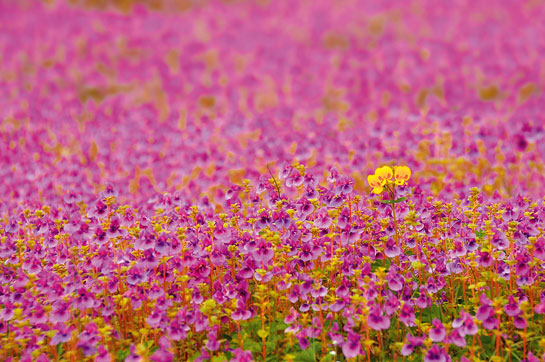 Photo: Vedwati Padwal.
Impatiens: On the Kaas Plateau in Maharashtra, flowers such as the stunning pink-coloured Impatiens and yellow-coloured Bristly Smithia weave a magical carpet annually during the monsoon. They are replaced later by other flowering plants in a continuous cycle of life and birth.
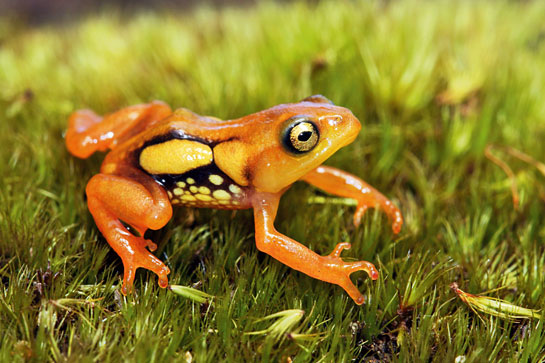 Photo: Shashank Dalvi.
Resplendent shrubfrog: The term ‘resplendent' in its name is for the stark red or orange colour which this critically endangered frog sports.
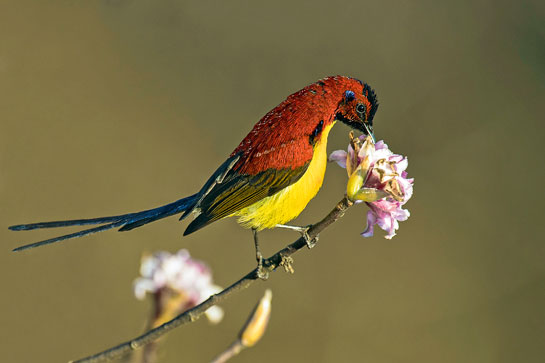 Photo: Mitash Biswas.
Mrs. Gould's Sunbird: The stunning, unmistakable colours on the male are to win over the female by advertising that it is in the ‘pink' of health!
Photo: Arjun Malhotra.
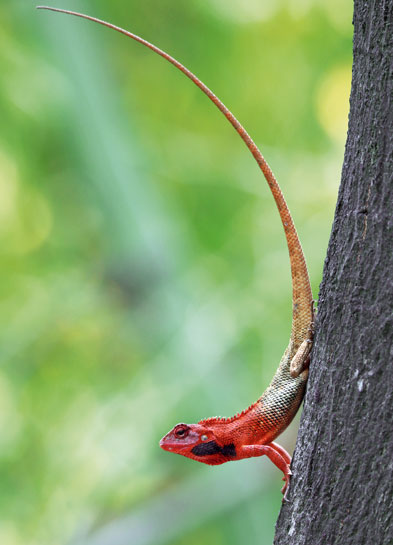
Oriental garden lizard: The male sports a bright red throat during the breeding season and a vibrant red head and upper chest that warns other males to stay away.
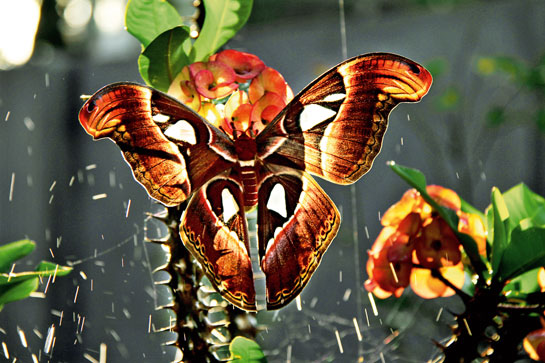 Photo: Nizam Ammas.
Atlas moth: The great big wings of the largest moth in the world are ‘mapped' with colourful patterns and wing tips that mimic the hood of a snake!
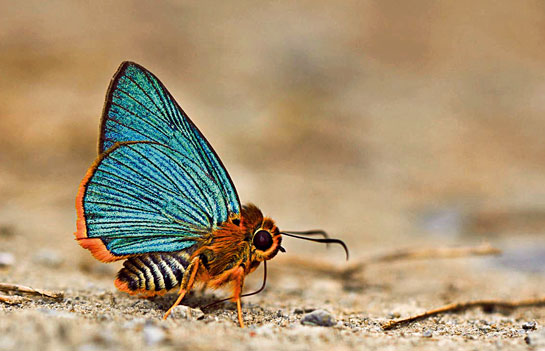 Photo: Varun Satose.
Green awlet: The stunning cyan and brown colours on this butterfly are achieved by pigments as well as the arrangement of the scales on its body.
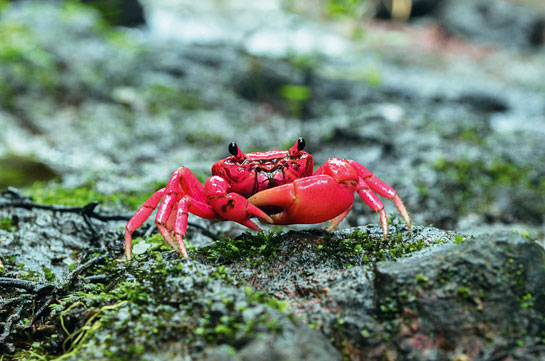 Photo: Ganesh Ramesh Mandavkar.
Pink forest crab: It is found scuttling about in the dense forests of the Western Ghats. It is also known to climb trees.
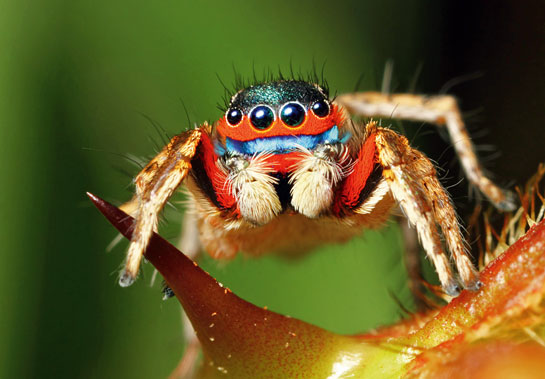 Photo: Karthikeyan Shanmugasundaram.
Jumping spider: The flashy colours on the male jumping spider serve to attract females.
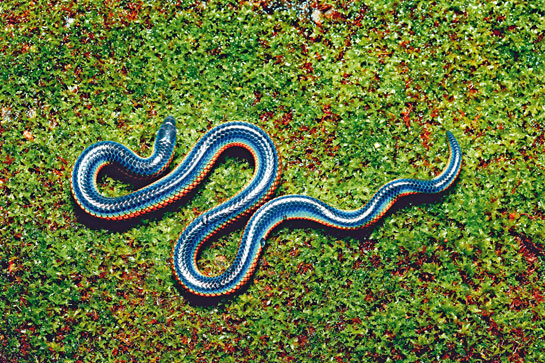 Photo: Datta Pednekar.
Pied-belly shieldtail: The scales on this snake reflect different colours relevant to the position of the observer! Such a phenomenon is called iridescence.
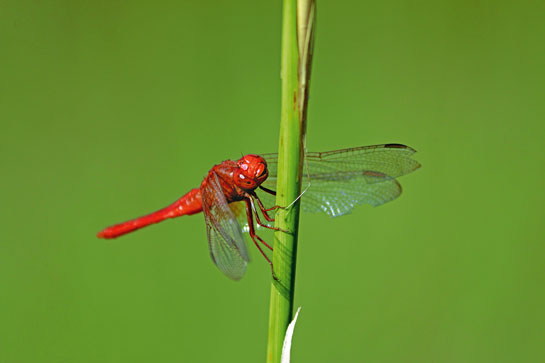 Photo: Abhishek Mittal.
Scarlet skimmer: The male dragonfly takes on a bright scarlet colour on maturity, before which it is yellowish-brown.
First appeared in: Sanctuary Asia, Vol. XXXVI, NO. 11, November 2016.