Saving Tigers Today For A Secure Future Tomorrow
Author:
First published in Sanctuary Asia,
Vol. 39
No. 7,
July 2019

I have been fortunate to be raised in a family of wildlife conservationists. Growing up with my grandfather, Padmashree Kailash Sankhala (Titled by the President - Tiger Man of India), has taught me a lot about the valuable connection we share with tigers. There is an urgent need to raise an alarm on the dwindling population of tigers and especially the loss of their habitat.
At the turn of the last century, there were 40,000 tigers that roamed across India in the wild. Today, this numbers stands close to 2,500. Poaching had been a major issue through the 90s and early 2000s, but we are losing more tigers today to habitat loss. We, as humans demand development (highways, electricity, mines, and more) and in most cases, it is at the cost of destruction of our natural ecosystem. Several wildlife corridors are disappearing as infrastructure development is being given increasing priority.
 Â
Â
Seeing tigers in any national park, is a sign of a healthy ecosystem. As my grandfather would say - “Tigers are an index of environmental quality. He does not wait to eat the last deer, but leaves the area before the final stages of deterioration takes place." If tigers don't exist, the forests are one step closer to deforestation. With no trees and forests, the carbon in the air goes up resulting in global warming. It is with this fear that I believe that we should spread awareness of how important these animals actually are for our environment and our well-being.
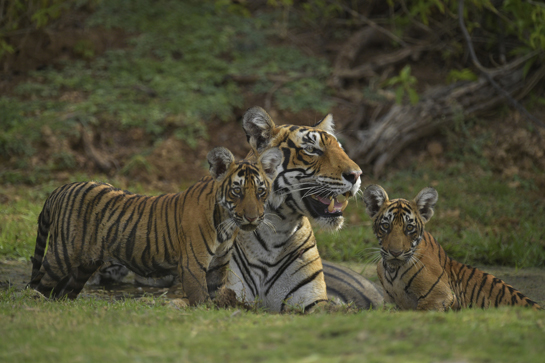
Although I have mentioned a sad state of affairs above, I do feel that India as a country has done a lot to protect our environment. We have created national parks and Project Tiger Reserves, which are safe havens for the last remaining tigers of the wild. In healthy ecosystems, we have seen tigresses give birth to over 20 cubs in their lifetimes and raising them to adulthood. The tiger population can increase over time if their habitats are secured and protected.
We are a diverse country with myriad tribes and religions. To many, nature is their religion. They depend on resources that are available around them in the forests. These communities are the guardians of our tigers and we need to empower them. It is their voice, which is first raised against destruction of their own home. We cannot save the forests without involving all the stakeholders in this battle. Hence, it is important that these communities are made part of the overall plan. Whether it is jobs through tourism, or voluntary relocation, they must have the opportunity to better their lives. Otherwise, farming, wood-cutting and encroachment of forest land, poaching for the pot or retaliation against cattle kills will destroy what remains of our natural heritage. We are a country of over a billion people. This fight to protect our green spaces is not easy especially for a developing country like India. Everyone deserves a better life, a chance to improve their livelihood, hence denying development is not the answer. But, can we do it while keeping our wild animals as stakeholders in the larger picture?
We must encourage children to explore and enjoy nature from a young age, whether it is a family or school trip. These are the times, when a child develops a passion for nature and wildlife. Over time, this very child will become more interested in saving our wildernesses and contribute towards a voice that will help decide policies that shape conservation. If a tiger is poached, children will create a hue and cry about it and take to the streets to demand justice. This is the power of democracy and an emotional connection to the wild tales of India.
Can we be conscious enough to recognise that global warming is real and that we should fight for our basic right of fresh clean air? It is all connected. Yes, the fresh clean air is connected to saving our tigers. Without tigers, there is no forest, there are no trees, the carbon emissions increase, and the weather patterns change. The ice is melting and the tigers are dying. It's all connected. It's time we woke up.
The thought that our future generations may never be able to see these beautiful animals in the wild scares me. Let's save our national animal. Our source of pride. The king of the jungle.
Tigerland will premiere in India on Animal Planet, Discovery Channel and Discovery World HD on 29th July 2019 at 8 pm IST.
Author: Amit Sankhala, grandson of Kailash Sankhala, the Tiger Man of India
Photos: Discovery CommunicationsÂ

