Spectacular Symbiosis!
Author:
First published in Sanctuary Asia,
Vol. 37
No. 3,
March 2017
A variety of intelligent associations exist among the millions of organisms that live on planet Earth. One such spectacular relationship is called symbiosis in which two different species form a mutually-benefitting and sometimes not-so-mutually benefitting relationship to survive. Here are some examples of symbiotic associations in nature!
Pink coral mushrooms
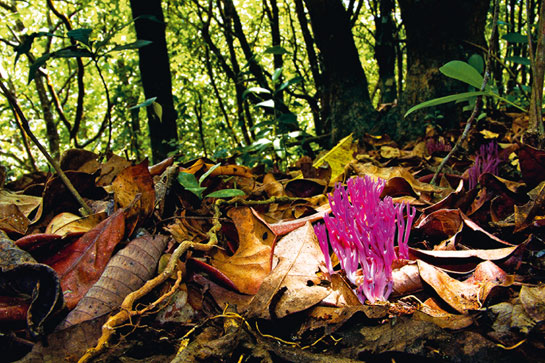 Photo: Abhishek Jain.
These striking pink coral mushrooms grow on tree roots. They provide vital soil nutrients to the trees in exchange for sugars.
Monkey and chital
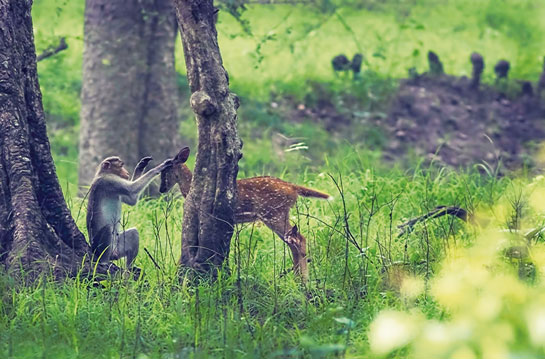 Photo: Dhanu Paran.
In India's wildernesses, monkeys and chital usually stay close to warn each other of predators lurking nearby.
Galls
 Photo: Dr. Anish Andheria.
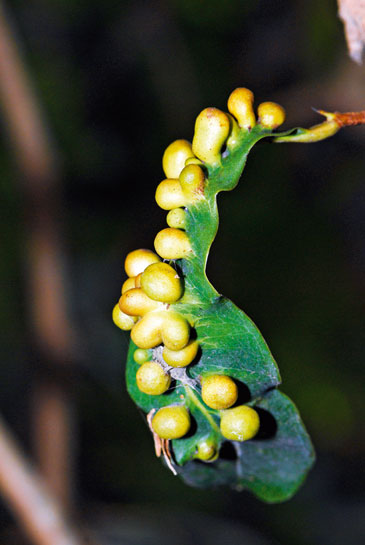
Such strangely-shaped growths on leaves known as galls usually occur because of various insect species that lay their eggs inside.
Weaver ants and treehoppers
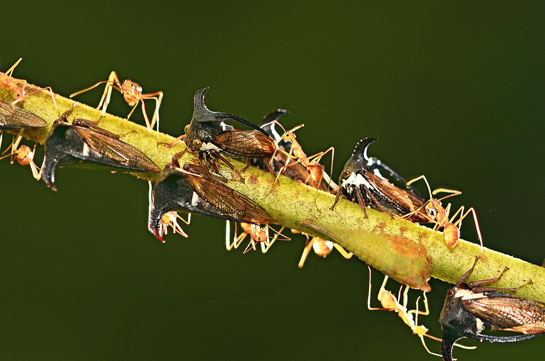 Photo: Vedwati Padwal.
Weaver ants take very good care of and protect horned treehoppers in return for the sweet honey dew they excrete.
Cleaner wrasse and moray eel
Photo: Christopher Metcalf.
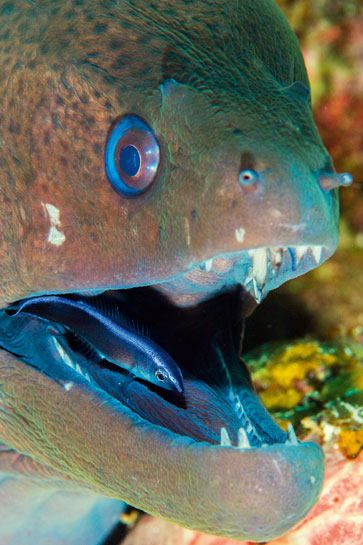
The tiny cleaner wrasse feeds on microscopic parasites on the moray eel's body, thus benefiting tting both.
Cattle Egrets, mynahs and rhino
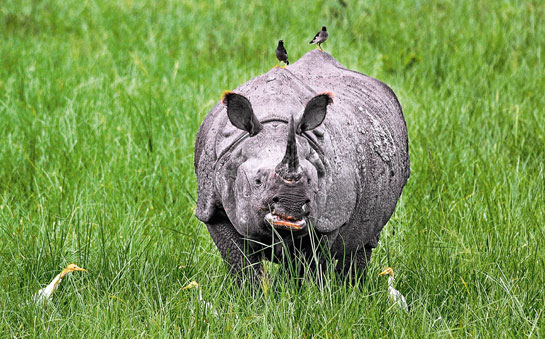 Photo: Manas Paran.
Cattle Egrets and mynas help the rhino by getting rid of the ticks on its body in return for a lip-smacking tick meal.
Sea anemone and crab
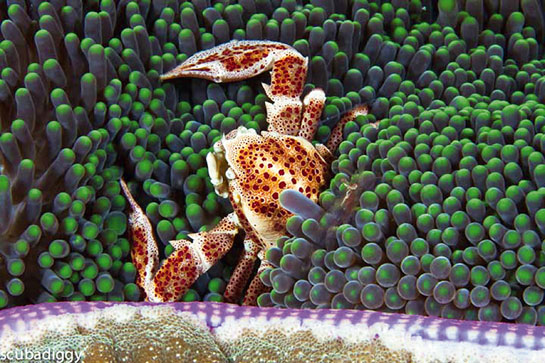 Photo: Digant Desai.
The venomous tentacles of the sea anemone provide a safe home for the crab.
Clownfish and sea anemone
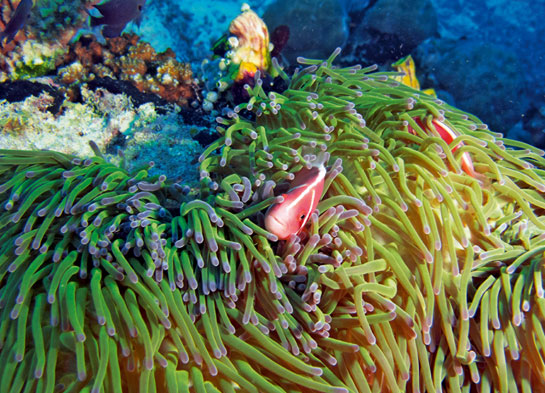 Photo: Dheeraj Nanda.
The clownfish helps the anemone stay clean and its bright colours lures the anemone's prey!
Crow and sambar
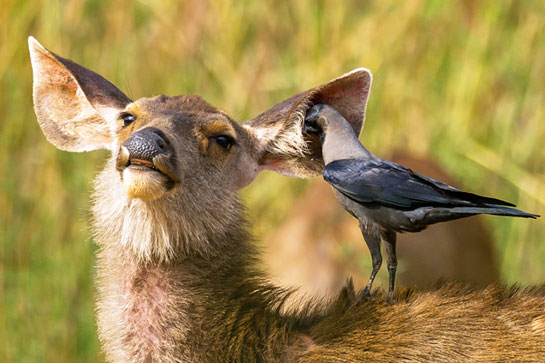 Photo: Sarabjit Lehal.Â
The opportunistic crow feeds on ticks and other parasites on the body of the sambar, helping it stay clean.
First appeared in: Sanctuary Asia, Vol. XXXVII, No. 3, March 2017.Â