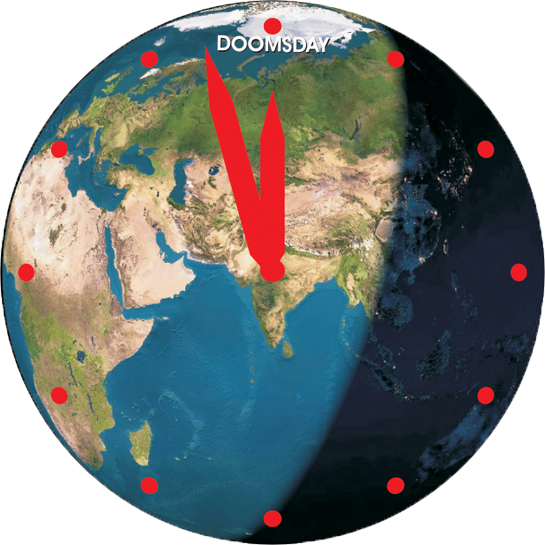
Tiger Doomsday Clock
Author:
First published in Sanctuary Asia,
Vol. 33
No. 3,
March 2013
Time is running out and so are our options because beyond a point, when the land simply ceases to be hospitable for tiger breeding, the numbers will surely plummet, with little or no help from poachers, encroachers, miners, or dam builders… whose combined effect has reversed most of Project Tiger's early successes. On top of this we have the reality of climate change to deal with.
2013 - Two minutes and 50 seconds to midnight (extinction). Apart from the Forest Rights Act, passed in 2007-2008, Indian forests are already being ruthlessly attacked by politicians and industrialists who seek to destroy tiger habitats with dams, mines and dismember them with highways. Jayanthi Natarajan, India's Environment Minister, said she would balance growth with environmental concerns, but that proved to be a short-lived promise. Her predecessor Jairam Ramesh, too capitulated to pressure from his cabinet colleagues and reversed many of the good policies he wanted instituted.
Sanctuary will monitor Natarajan's actions closely, particularly in light of the fact that she has been giving approvals to almost every project that has come to the Ministry for clearance in the one year that she has been Minister, even over-ruling those that the Forest Advisory Committee advised her to reject. India's National Board for Wildlife has traditionally been a bulwark of support for our wildlife. But will it be allowed to continue playing this role, or will it be weakened by determined politicians? With isolation and strict protection India's wildlife can help regenerate degraded forest lands and ecosystems. This could also deliver forest dwellers ‘right livelihoods' in perpetuity, and help us fight climate change. Our doomsday clock can move both forward and back, but that depends on whether Homo sapiens proves to be wise, or unwise. To see how you can make a difference and turn back the hands of fate to save not only India's wilds, but our own human way of life, click here.
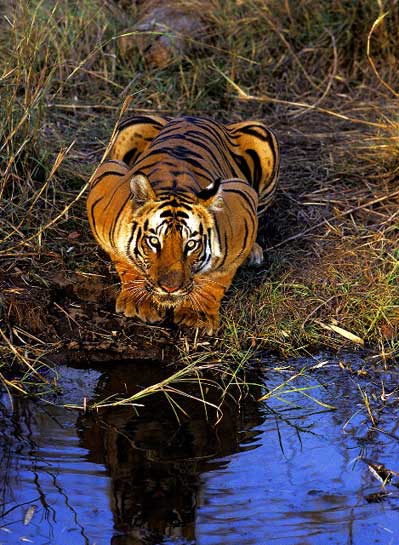
Photograph by Jagdeep Rajput.
Author: Sanctuary Asia
First appeared in: Sanctuary Asia.