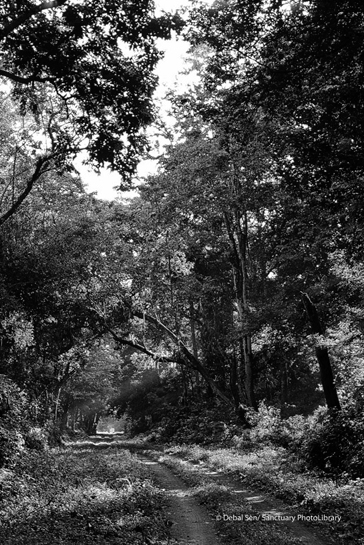
Tigers Extinct In Buxa?
Author:
First published in Sanctuary Asia,
Vol. 35
No. 4,
April 2015
Photo: Debal Sen.
No tiger images have emerged from the camera-trap exercise that was initiated last year. Based on certain scat samples sent by the Bengal Forest Department to the Wildlife Institute of India (WII), two tigers from Buxa were identified, but the authenticity of those samples is doubted by the WII team who failed to locate any tiger in the areas from where the samples were apparently collected. In the past too, allegations of scat samples being collected from the adjoining wildlife rescue centre and presented as ones from the wild have come to light.
"We took the GPS coordinates of the scat samples from the state foresters and sent our research team there, but the team didn't find any tiger sign in and around those areas. So, we could not authenticate the origin of the scat." said Dr. Y.V. Jhala of WII.
The experiences of several wildlife researchers, experts and enthusiasts add further weight to these suspicions. From an anonymous researcher who spent two years in Buxa studying elephants and never came across a single tiger or any signs of its presence, to the absence of any cattle-lifting incident in the park's fringe villages says a lot about how dismally low the tiger population in Buxa seems to have plummeted. In the worst case scenario, it is possible that Buxa has tragically gone the way of the Sariska Tiger Reserve that lost all its tigers to poaching in 2004.
In 2004, the Sariska Tiger Reserve in Rajasthan witnessed a disastrous wipeout of its entire tiger population. Learn more about Sariska, and its shaky future here: Post Sariska - Are Wild Tigers Secure Today?