Sanctuary Asia Endorses IntAct Statement Of Priniciples
Author:
First published in Sanctuary Asia,
Vol. 35
No. 5,
May 2015
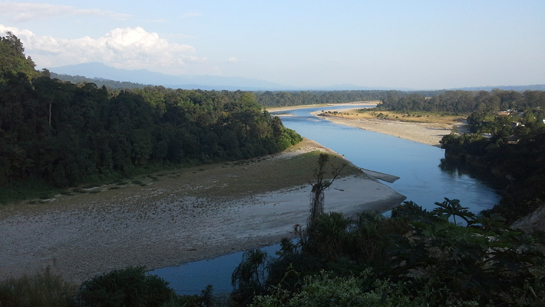 Photo Courtesy: Sunil Kyarong/WTI.
The International Action for Primary Forests is an initiative designed to raise awareness about the importance of protecting primary forests. Primary forests play an integral part in good ecological function and are irreplaceable. They structure natural life support systems that are imperative to the maintenance of biological diversity, provision of natural resources, climate stability, and the conservation and sustenance of indigenous people and their cultures.
However, in spite of conservation efforts, Earth's primary forests are in a crisis greater than ever! Between 2000 and 2012 alone, more than 230 million hectares of forests were destroyed. That is slightly larger than the size of Greenland! IntAct has gathered recent research and scientific findings that make a compelling case which could facilitate a global consensus towards protecting the remaining primary forests of the world.
Primary forests accommodate a tremendous amount of Earth's terrestrial species. The continuous degradation and consequently, the destruction of habitats of these species will only perpetuate the Earth's sixth mass extinction crisis. It will also force a rise in atmospheric carbon dioxide.
Industrial activity and primary forest conservation are still at conflict. The occurrence of industrial logging gives rise to increased carbon emissions, reduces biodiversity, causes overall degradation of air and water quality, and creates risk of fire. Industrial logging also converts forests to agriculture lands. This has been expanding at an extremely rapid rate, further putting primary forests at risk of deforestation. An increase in industrial activity, particularly logging also results in the building and widening of roads. This compromises the integrity of primary forest landscapes. By creating and enforcing government protected areas and indigenous peoples' territories, private protected areas and more conservation schemes, industrial activity could be prevented within primary forests. Solutions such as providing for wood demands can be met without exploiting the resources of primary forests. This can be accomplished by using existing plantations on previously cleared land or using degraded forests with low biodiversity value.
Unfortunately, forest conservation has not been an international priority in policy agreements. Therefore it is imperative to seize the opportunity to change this approach. Reaching out to governments, intergovernmental and non-governmental organisations, corporations and financiers around the world to recognise to prevent industrial activity in primary forests and integrating it into laws and policies is a matter of urgency. Several international policies pertaining to forest conservation will come to a conclusion in the next few years. These include the 11th Session of the United Nations Forum on Forests, development of the United Nations' Post- 2015 Development Agenda and Sustainable Development Goals (SDGs), a new agreement under the United Nations Framework Convention on Climate Change (UNFCCC) and revision of World Bank safeguard policies. This gives a valuable window of opportunity to prioritise the protection of Earth's primary forests.
Source: primaryforest.org.

